
Why Identical-Looking Power Banks Differ 2x in Price - and How to Tell Them Apart
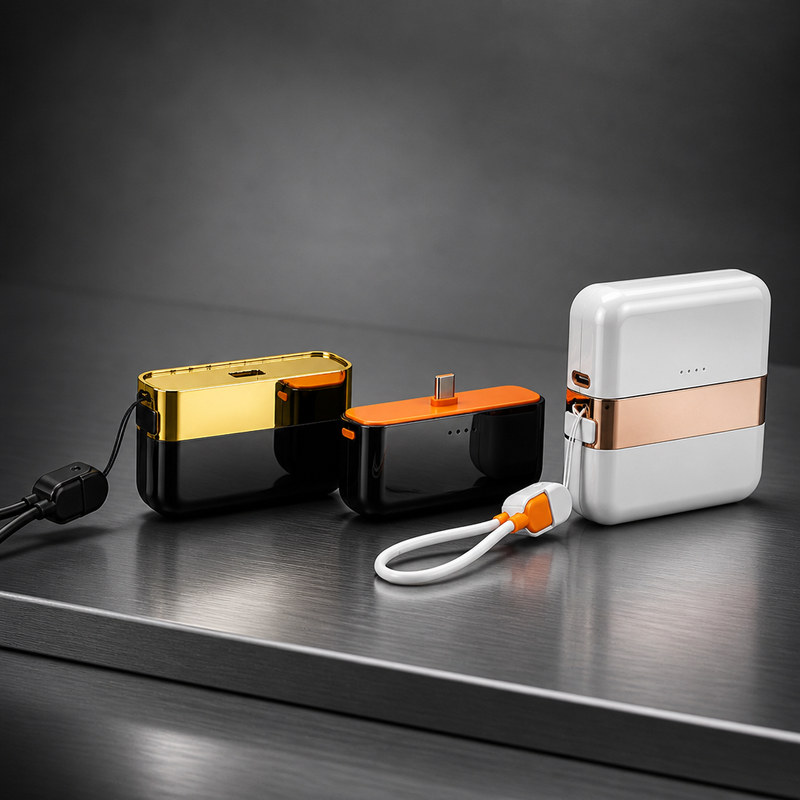
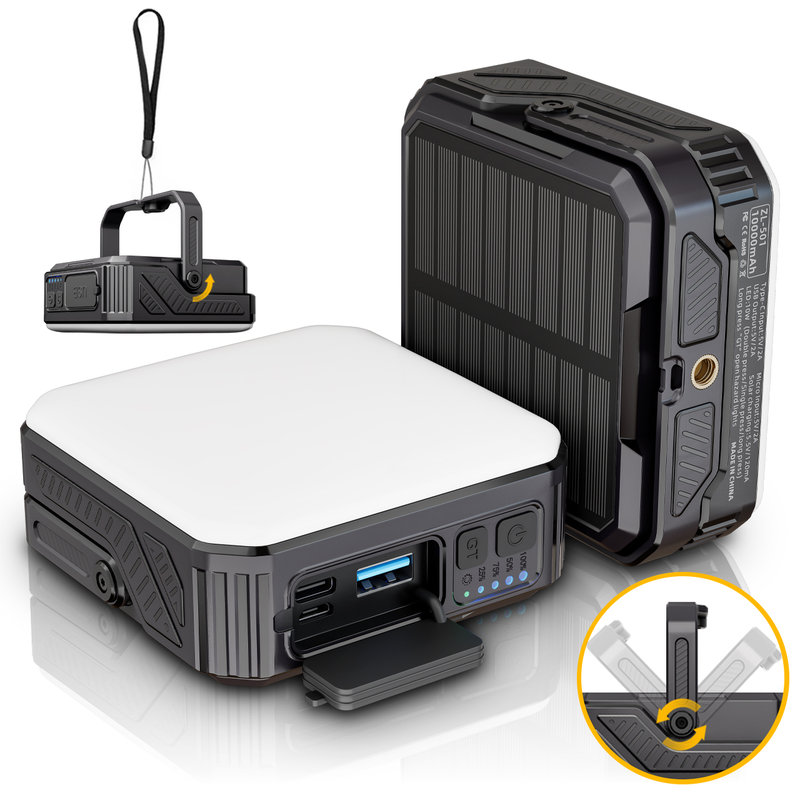
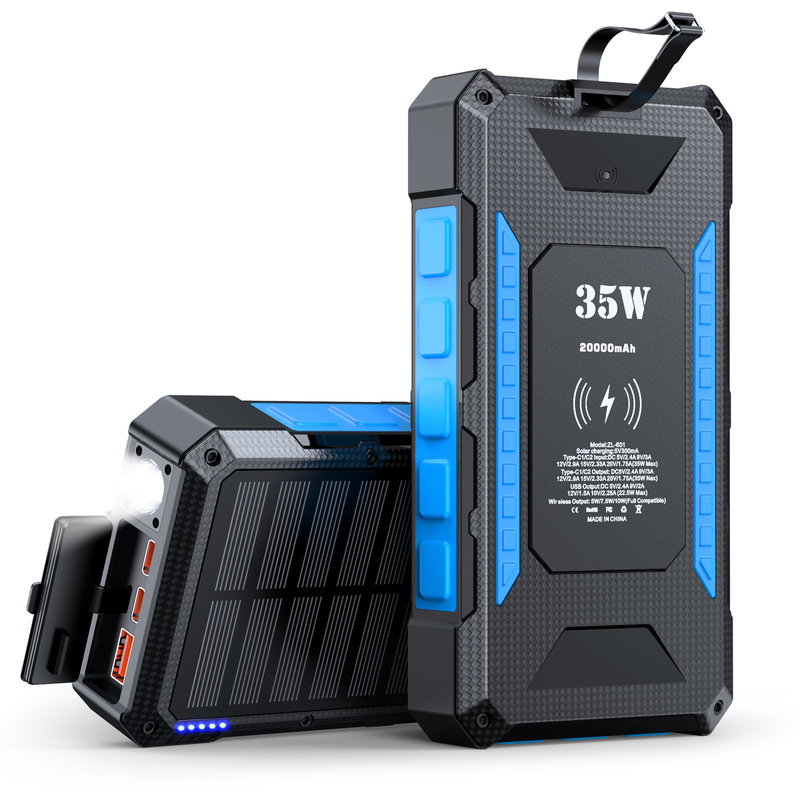
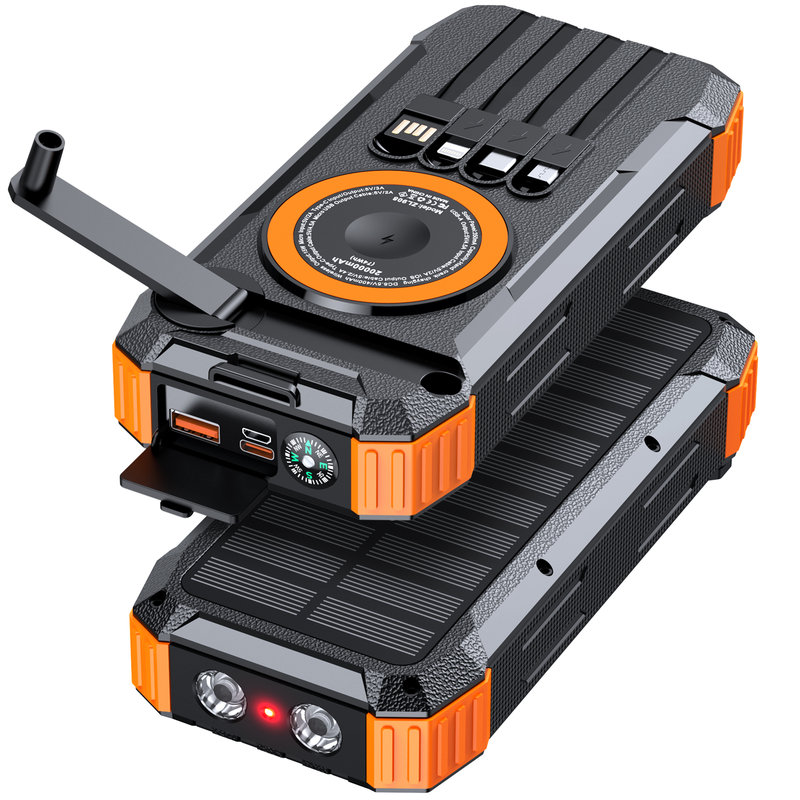
Two suppliers quote the same 20,000mAh power bank. One says USD 6.80, the other USD 13.50. The photos look identical, the MOQ is identical, and the casing is literally the same mould. This is normal in the power bank trade - and the difference is almost never a mystery. It comes from what sits inside the shell, and from how the quotation is written.
1. Most "identical" power banks share the same public mould
When a housing design becomes popular, dozens of factories buy the same tooling and build completely different products inside it. The shell tells you nothing about the cell, the board or the safety margin. Everything that matters is behind the four screws.
2. The cells are 50-60% of the cost
- Tier-1 grade-A cells (Lishen, EVE, Samsung, LG, Panasonic): full capacity, roughly 500-1,000 cycles to 80% of original capacity, low self-heating, stable internal resistance. The most expensive option, and the one that behaves the same in year two as in month one.
- Grade-B cells: cells that failed a sorting step or come from overproduction. Capacity reads close to nominal when new, but cycle life drops to roughly 300-400 cycles and the field failure rate climbs.
- Salvaged cells: recovered from used battery packs. Cost is a fraction of new cells. Cycle life is 200-400 cycles at best, and swelling within months is common.
- Fake capacity: a 20,000mAh shell holding 10,000mAh of cells - sometimes with ballast weight so it feels right in the hand.
Cell format matters as well. A 18650 cylindrical cell is the cheapest way to store energy at this size. A polymer pouch cell costs roughly 20-50% more at the same capacity, and considerably more for thin, curved or custom shapes. Neither format is inherently better - but the price difference is real and legitimate, and it should be visible in the quotation.
3. The protection board is the second biggest gap
A proper BMS uses a branded controller with over-charge, over-discharge, over-current, short-circuit and temperature protection, and holds output voltage steady under load. A cost-reduced board keeps only the basic cut-off, often without temperature sensing. The visible symptoms are heat and unstable charging current, which quietly age the phone battery being charged.
On the bill of materials this is a difference of roughly USD 0.40 to 2.00 - 5-15% of finished cost - and almost invisible from the outside.
4. Housing material and flame rating
Reputable factories mould the housing in V-0 rated flame-retardant PC/ABS. Cheaper builds use recycled plastic that deforms at high temperature and does not self-extinguish. It is a small share of the cost and a large share of the safety margin.
5. Rated capacity is not cell capacity
Cells are rated at 3.7V; USB output is 5V. Converting up loses energy, and the loss is substantial:
20,000mAh at 3.7V = 74Wh. At 5V that is 14,800mAh at perfect efficiency. At a realistic 70-75% conversion, actual output lands around 10,400-11,100mAh.
A responsible supplier prints the rated output capacity on the label. A cheap one prints only the cell capacity and lets the buyer assume the two numbers are the same. If a listing quotes 20,000mAh with no rated capacity, ask for the discharge test curve - the shape of that curve tells you more than the headline number.
6. Certification cost depends on the market you sell into
For export the working set is UN38.3 for transport, IEC 62133 for cell safety, then CE and FCC for the destination market, PSE for Japan and KC for Korea. Testing is done per model, and each report costs money and calendar time - which is a legitimate part of the unit price at low volumes.
China's CCC requirement applies to power banks sold inside China; it is not a substitute for the export certificates above. A supplier who says "we have CCC" but cannot produce a UN38.3 report is not ready to ship by air, whatever the price says.
7. Sometimes the gap is not the product at all
Before concluding that one supplier is twice as expensive, check that both quotes describe the same transaction:
| Quote basis | Typical effect on the number |
|---|---|
| EXW vs FOB vs DDP (who pays freight and duty) | 15-40% |
| VAT invoice included or not (13% in China) | about 13% |
| MOQ tier (100 pcs vs 3,000 pcs) | 10-25% |
| Accessories (cable gauge, retail box, manual) | 3-8% |
Two quotes can differ by 60% before a single cell is discussed. Comparing an EXW price without VAT against a DDP price with VAT is the most common way buyers create a price gap that does not exist.
8. Four questions to ask before comparing price
- What is the rated output capacity, and can you send the discharge test curve?
- Which cell brand, model and batch will be used?
- Which BMS controller sits on the board?
- Can you send the certificate numbers for UN38.3, IEC 62133, CE and FCC?
A supplier who answers all four without hesitating is worth a second conversation. A supplier who answers none of them is not cheap - they are simply quoting a different product.
How Casun quotes
We are not the cheapest quotation you will receive on a 10,000mAh power bank, and we do not try to be. Our quotes state the cell brand and grade, the BMS solution, the rated output capacity and the certificate numbers, so that the comparison is like for like. MOQ starts at 100 pcs for most models, bulk lead time is 15-25 days, and every unit carries a 12-month warranty.
If you are comparing suppliers right now, send us the other quote and we will tell you where the difference sits - including when it is not in our favour. Our power bank range and the full FAQ are the fastest way to check what we actually build.